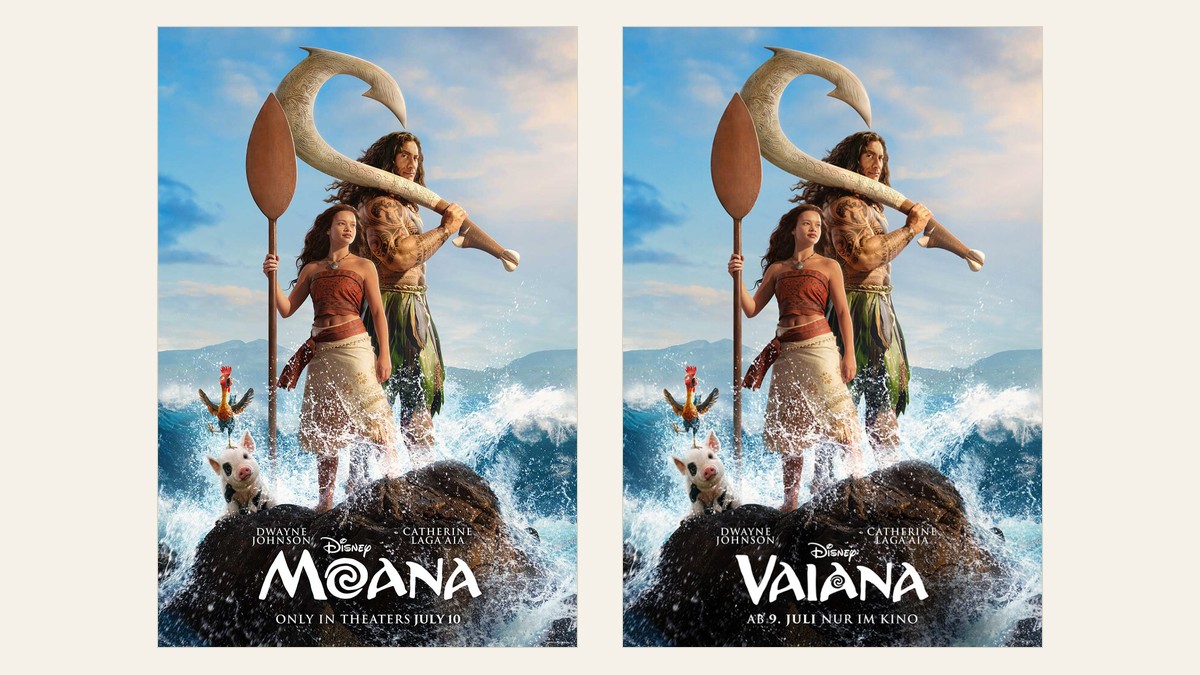
The Disney film opening at my local cinema this week is called 'Vaiana'. Sweden has only ever known her by that name, and so has Germany, where the remake arrived on Thursday, a day ahead of the United States. If you’re reading this from the Anglosphere, this is the film you call 'Moana', the one your critics spent Wednesday feeding through a wood chipper.
The renaming was never a creative decision. When the animated original crossed the Atlantic in 2016, Disney discovered that 'Moana' was already registered as a trademark in Spain and a scatter of other European countries, and so the company that polices its own mouse with drone strikes had to rebrand its heroine across a continent. Italy required a separate solution, and the problem there, as any Italian over a certain age could explain, had a name: Moana Pozzi, the country’s most famous adult-film star, a woman so nationally beloved she co-founded a political party. The film became 'Oceania' there, the girl became Vaiana, and the reason has gone politely unmentioned for a decade. I’ve never had that kind of restraint, and a fact this good deserves to be said out loud.
The name is also the first clue to how fast Disney now moves. The company has been remaking this film since before it opened: Europe’s 2016 release had the lead swapped out on day one. Friday’s version is the third film in ten years about a girl already on her second name and now her second medium. For scale, last summer’s 'Lilo & Stitch' waited 23 years and cleared a billion dollars anyway, which is presumably when someone in Burbank asked why the company was waiting at all. Ten years is the shortest interval the studio has ever attempted, and everything about this week says the machine finally lapped its own audience.
The reviews landed on Wednesday and settled in the mid-thirties on Rotten Tomatoes. The 2016 original sits at 95. The Guardian reviewed Dwayne Johnson’s Maui the way one reviews a firmware update, and one critic spent a stretch of the film scanning Maui’s digital torso for nipples before reporting back empty-handed.
The good notices agree on one thing. Catherine Laga’aia, the nineteen-year-old cast from 32,000 submissions, gets praised even by critics who want the rest of the film returned to the sea. Variety called the whole thing the best of Disney’s remakes, which would land better if the same critic hadn’t also enjoyed 'Snow White'.
Nobody can agree what it cost. The budget sits between $200 and $250 million, a gap wide enough to fund a second film out of the rounding error, and that is before Disney spends a further fortune telling you this one exists. The tracking has sunk all summer, from an $85 million opening in June to $45 to $65 million now, with a few exhibitors muttering forty. Forty is 'Snow White' territory, and Disney knows what lives there. That remake opened to $42 million and limped to $206 million worldwide. It scared the studio into pausing its 'Tangled' remake.
None of this slowed the machine on its way in. Disney greenlit the remake before 'Moana 2' existed as a cinema film at all; the sequel began life as a Disney+ series before being promoted to a theatrical release, and it arrived in cinemas nineteen months ago on its way to $1.06 billion. On the press tour for the remake of the first film, Johnson confirmed a third animated film is coming, which the German film press reported under the only headline available to it: 'Vaiana 3'. The franchise now runs in both directions at once, forwards into sequels and backwards into itself, and the lanes sit close enough to share a hard shoulder.
Thomas Kail, directing his first feature after 'Hamilton', supplied the defence himself: 'All those 7-year-olds who saw it that are 17.' He meant it warmly, and he leaned on his theatre background, where revivals are routine. The theatre comparison holds right up until you remember that a revival recasts precisely because the performers have aged out of the parts. Here the demigod is played by the same man who played him last time, now wearing a forty-pound prosthetic approximation of his own torso, which he has described as 'hot as shit'. Johnson also said he 'never bought into this idea that you have to wait 20 years'. He produces the film and stars in it, which puts him on the selling side of the counter. Nobody on that side has ever wanted the customer to wait.
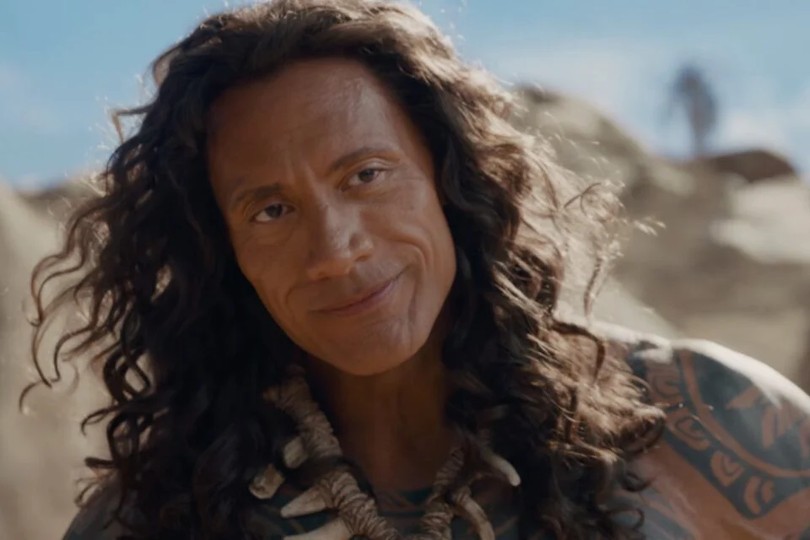
The word doing the most work in all of this is 'live-action', and it can’t take the weight. The ocean in this film is an effect, so are the pig and the chicken, and Maui spends long stretches as one too, whenever the script needs him to be a hawk. What 'live-action' describes here is not a production method but a price: the same story, rendered again at higher cost, sold back to the same audience as a new product.

The one defence that survives contact with the finished film belongs to Lin-Manuel Miranda, who argued that an animated film can represent Pacific Islander culture while a live-action one can employ it. On the evidence, Laga’aia makes that case better than the film built around her does. She will get a career out of this. The film will get a write-down.
The seven-year-old Kail is counting on turned seventeen this year, and she buys her own tickets now. Next Friday she can put the money on 'The Odyssey' instead, a story that waited 2,700 years for its IMAX cameras. Nobody is going to ask if it came too soon.